Astromail
Perfecting French Grammar, one Transmission at a Time 🇫🇷 🛰️
Project: A micro-learning, mobile-first serious game designed as a job simulator to reinforce French spelling and grammar skills.
Client: Orthographe Formation (CEO: Muriel Chaulet)
Audience: Professional, native French speakers who have completed intensive remedial spelling training and need ongoing practice.
My Role: Product Owner, responsible for the project’s vision and ensuring the final product met the client's needs.
Team members: 1 Scrum Master, 2 Developers.
Tools: Articulate Storyline, Canva, Audacity, Miro, Notion, Dall-E, DaVinci Resolve
The Problem
Orthograph Formation provides intensive French grammar and spelling training to French-native customer service professionals with jobs requiring excellent written communication skills, but who are in need of spelling remediation. The core business challenge was to combat knowledge decay after in-person courses end, ensuring that clients utilise their new skills while on the job writing emails and messages.
This presented a central design challenge: How do you create an engaging grammar practice tool without it feeling like a chore? We needed to avoid the common pitfall of simply dressing up boring grammar drills with superficial gamification elements. The learning activity itself needed to be intrinsically motivating and directly relevant to the learners' professional lives.
The Solution
In response, we dreamed up Astromail, a narrative-driven job simulator-style mobile game that transforms grammar practice into a meaningful in-game task. Learners take on the role of an interplanetary communications specialist on a Mars mission, where their job is to edit and perfect messages for transmission. This pretext makes grammar and spelling correction the core gameplay mechanic, not an afterthought.
The story unfolds through the very messages they correct, creating a world of political intrigue and mystery that hooks the player. By mirroring their real-life work (processing professional correspondence) in a fantastical setting, Astromail makes practice feel both relevant and escapist. The game directly integrates the visual and conceptual tools of the client's proprietary simpliGRAM® method, creating a seamless transition from their in-person training to digital reinforcement.
The Process - An ADDIE Approach
We followed the ADDIE model to ensure a structured and learner-focused development process.
Process Overview
In close partnership with our client, I led the team in developing Astromail. The process involved translating a hands-on, tangible teaching method into an immersive serious game, focusing on narrative-driven design to foster long-term skill reinforcement and learner engagement.
Analysis & Initial Proposal: Conducted in-depth client and learner analysis, including hands-on training in the simpliGRAM method, to define the core design challenge. Delivered an initial concept proposal to secure client buy-in.
Design & Text-Based Storyboard: Designed the game's core architecture and narrative world. Delivered a comprehensive design document, including a textual and visual storyboard that outlined every screen, interaction, and line of dialogue.
Visual Design, Mockups & Interactive Prototype: Created a cohesive visual identity that blended the client's established brand with a unique sci-fi aesthetic. Delivered a style guide, mockups for all game screens, and a functional prototype of several key game elements, built in articulate storyline.
Full Development & Delivery: Executed the full build of the four-episode first season of the game based on the approved designs and prototype, integrating all assets into a final, polished product ready for LMS deployment.
Analysis & Initial Proposal
Our process began with deep analysis of our client’s business goals, needs, and the game’s target audience. We also reviewed the state of the art, analysing existing e-learning solutions for French grammar and spelling, as well as games from which we might take inspiration.
Importantly, to understand the soul of the simpliGRAM® method, we underwent an in-person training session with our client, manipulating the tools ourselves to ensure our digital adaptation would feel authentic and familiar to learners.
Critically, we realised that our e-learning solution had to place learners in a situation where practicing French grammar was a meaningful and necessary action. This insight led to the concept of a "job simulator," which became the foundation of our project pitch to the client.
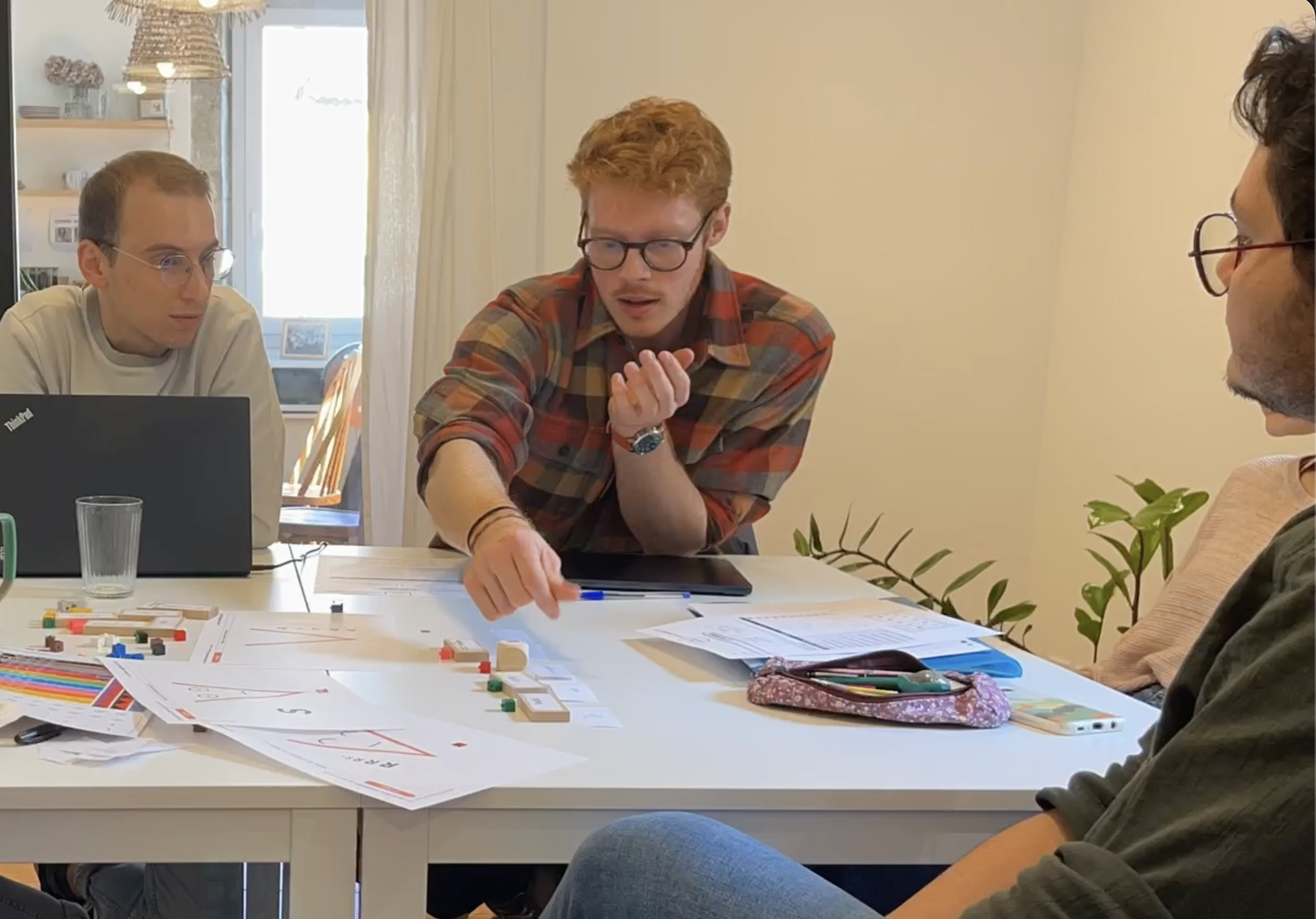
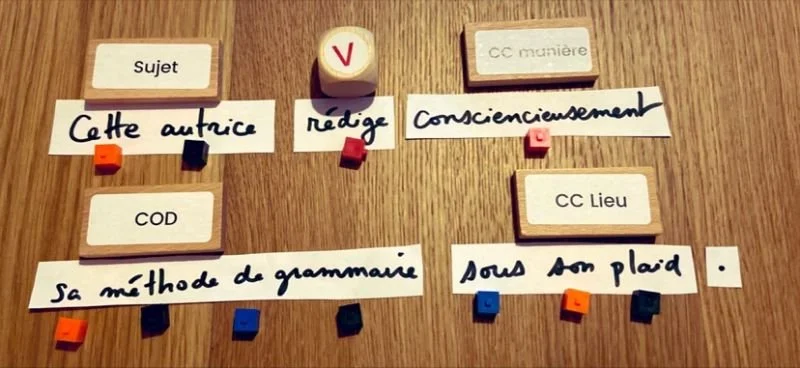
The team learning the simpliGRAM® method to ensure a deep understanding of client and learner needs.
Design & Text-based Storyboard
With the core concept approved, we moved into the design phase. This was a two-pronged effort: world-building and architectural design.
World-Building: Through a series of brainstorming sessions I led, we crafted a near-future sci-fi narrative where the player is a communications specialist on a UN mission to terraform Mars. The high-stakes pretext—that messages must be grammatically perfect for the transmission device to function—makes the learning task the core of the player's in-game job. The story of political intrigue and a secret rebellion unfolds through the very emails the player corrects, rewarding their attention to detail.
Game Architecture: To meet the demand of providing a series of concise but frequent learning opportunities, we designed a scalable structure for the game as a saga. The first season contains four 10-minute episodes, each targeting a specific linguistic objective. Episodes follow a consistent four-step learning loop designed for maximum reinforcement: Intro > Error Identification > Error Correction > Cliffhanger.
The key deliverable from this phase was a comprehensive, 45-page textual and visual storyboard that detailed every decision point, feedback message, and narrative beat for the entire first season.
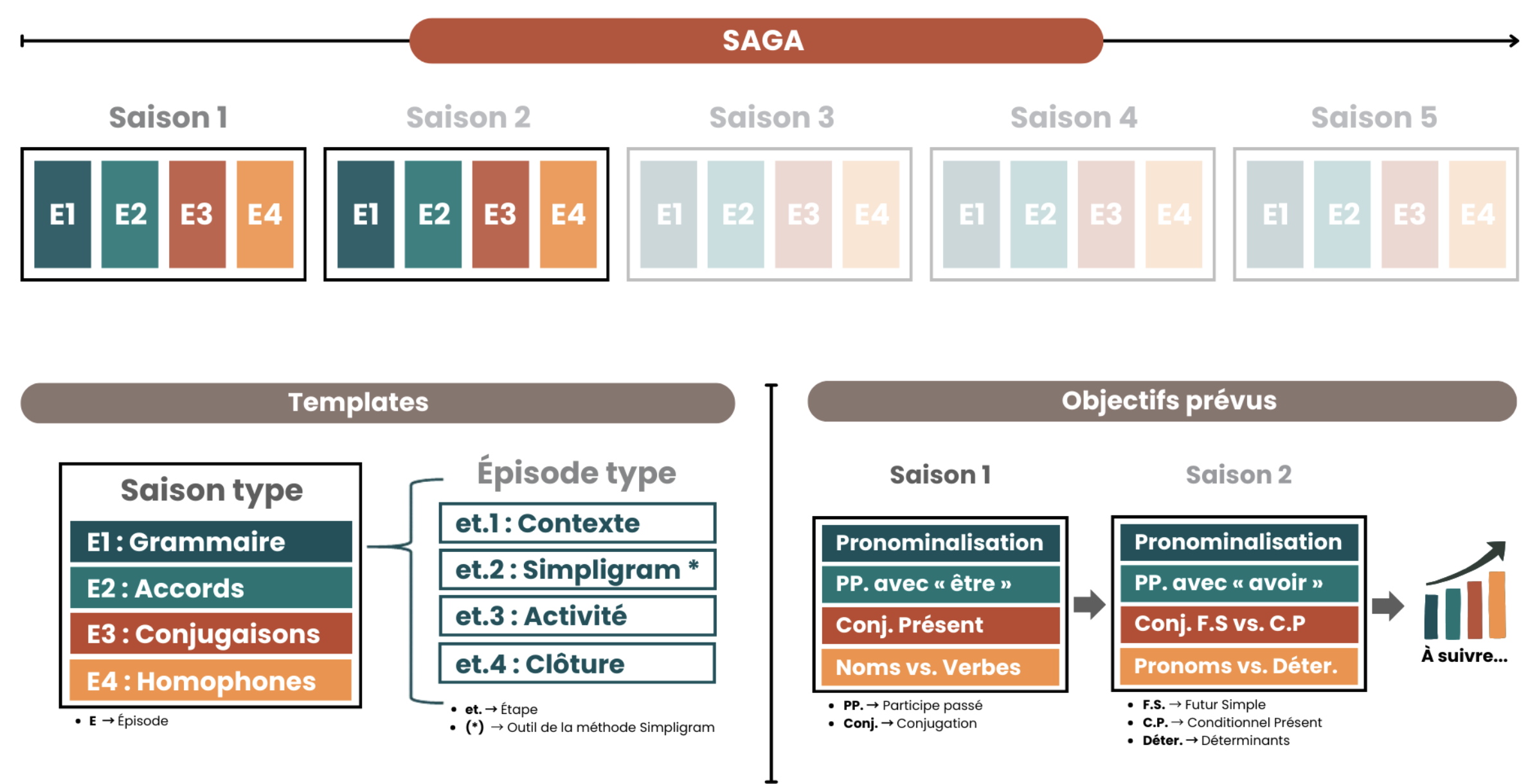
Graphical representation of Astromail’s architecture of seasons, episodes, and steps.
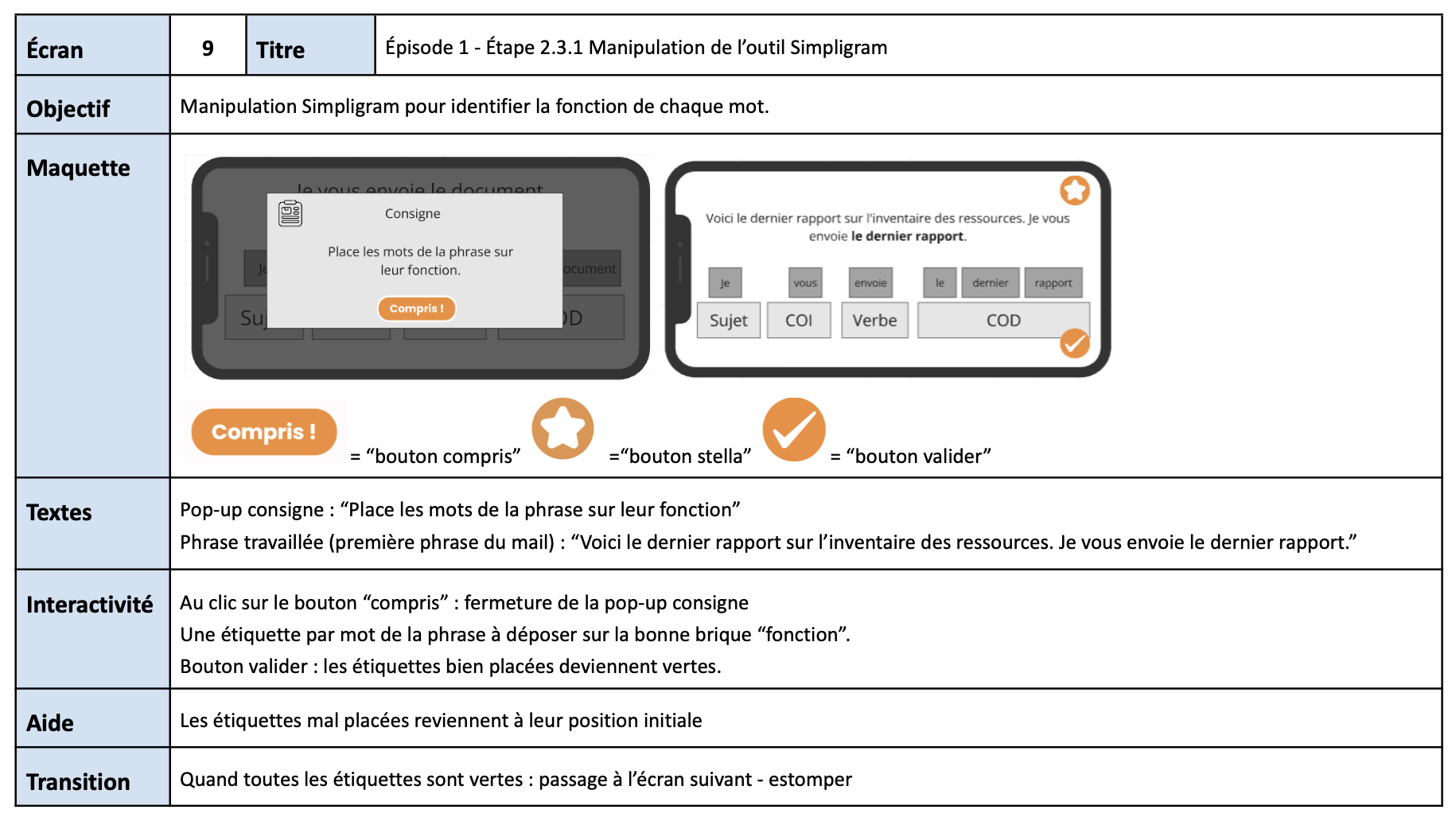
Example page from our 45-page storyboard which laid out each element of each screen for season 1.
Visual Design & Mockups
Alongside the preparation of our storyboard, we needed to clearly define Astromail's visual identity. The challenge was to create a sleek, futuristic sci-fi interface that still felt grounded in the visual language of the simpliGRAM® method.
Drawing on the pre-existing brand identity of Orthographe Formation for the games color palette, we envisioned the universe of our game. We also deliberately integrated the colors and shapes of the physical learning blocks of the simpliGRAM® method into the UI of our digital tools, making the game a recognizable extension of their in-person training.
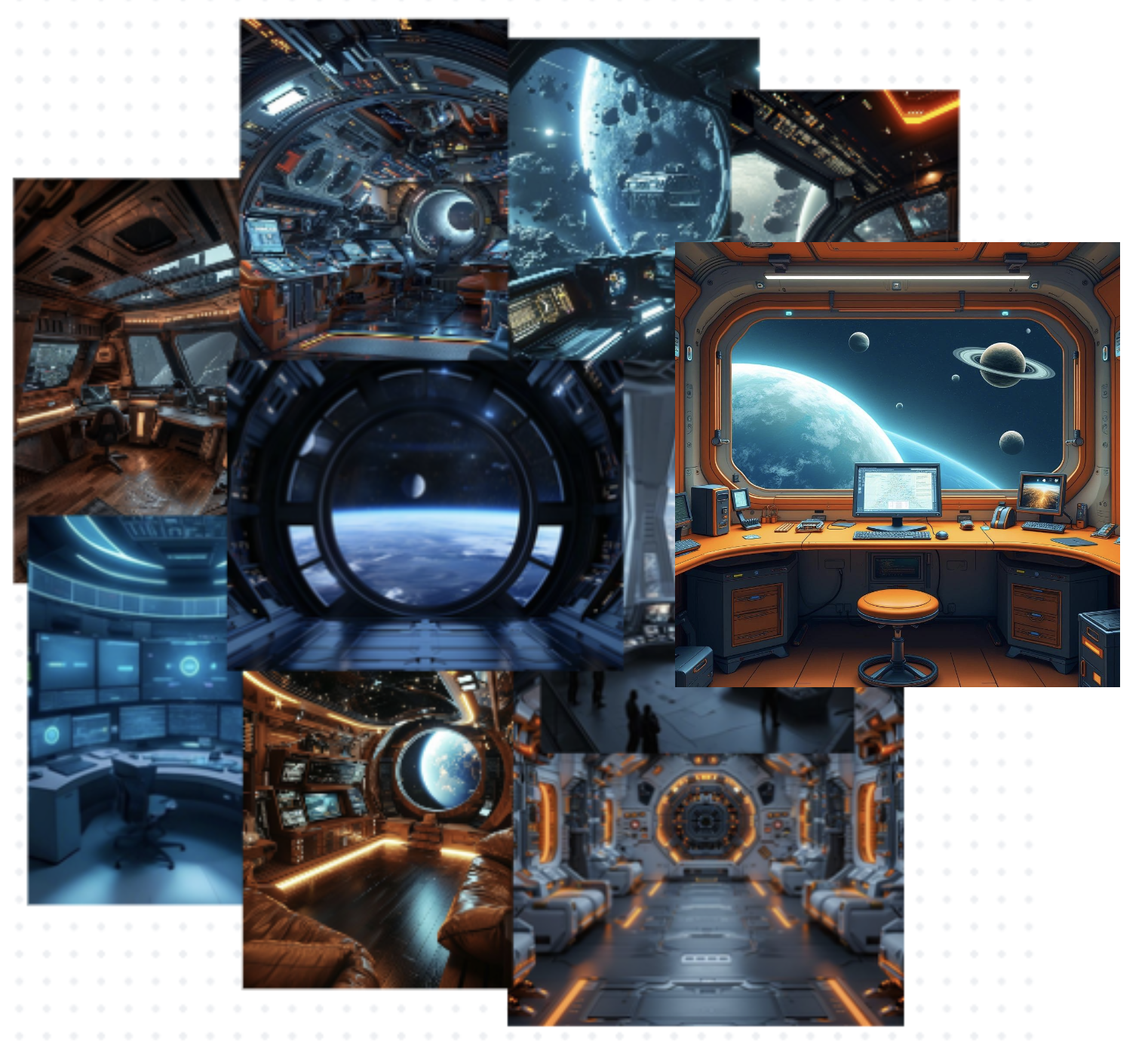
By means of moodboards and by drawing inspiration of existing games, we created the Astromail visual universe.
Using Canva and Miro, we then created a complete style guide and set of mockups for every key screen. This ensured a consistent and professional user experience before a single slide was developed in Storyline.
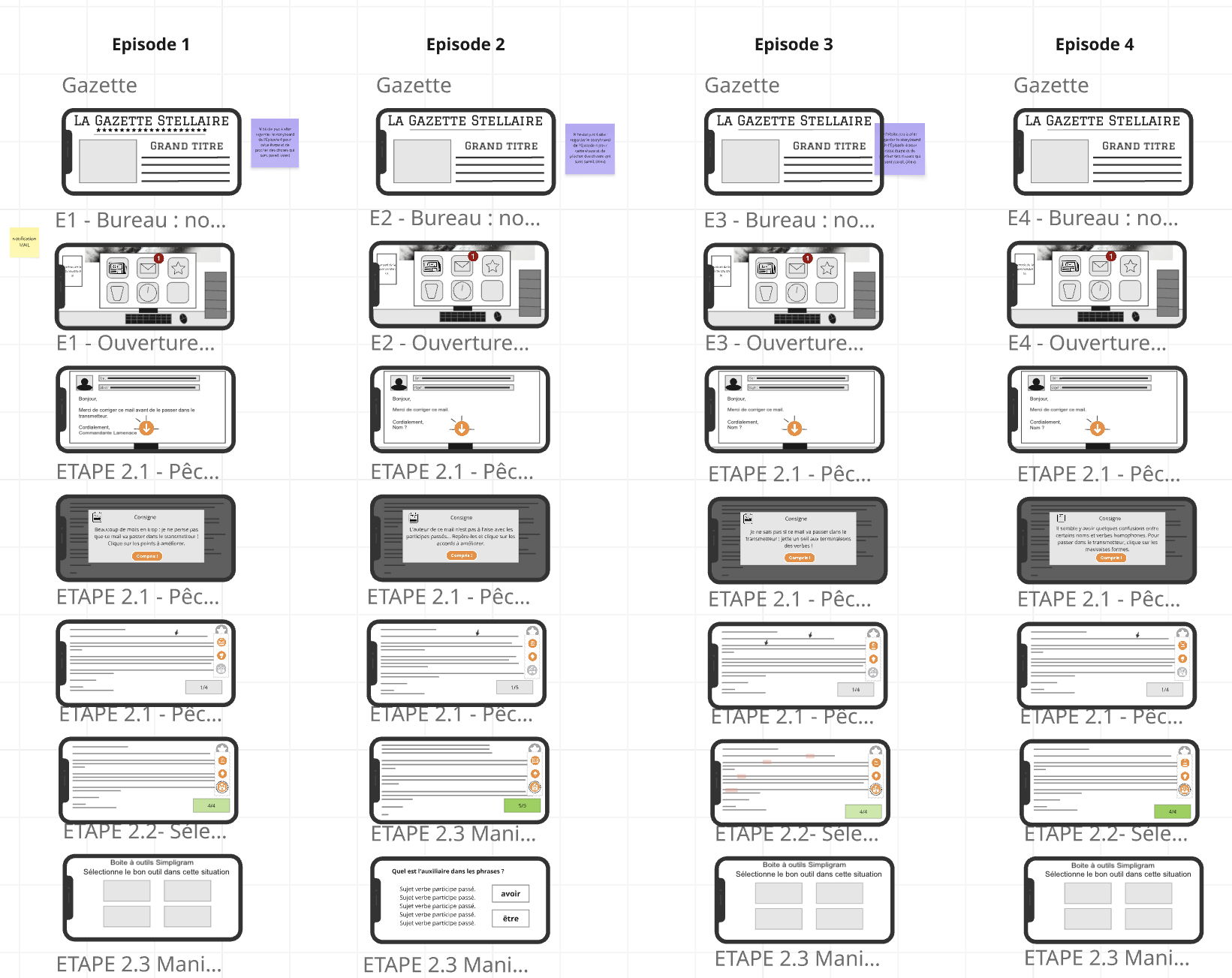
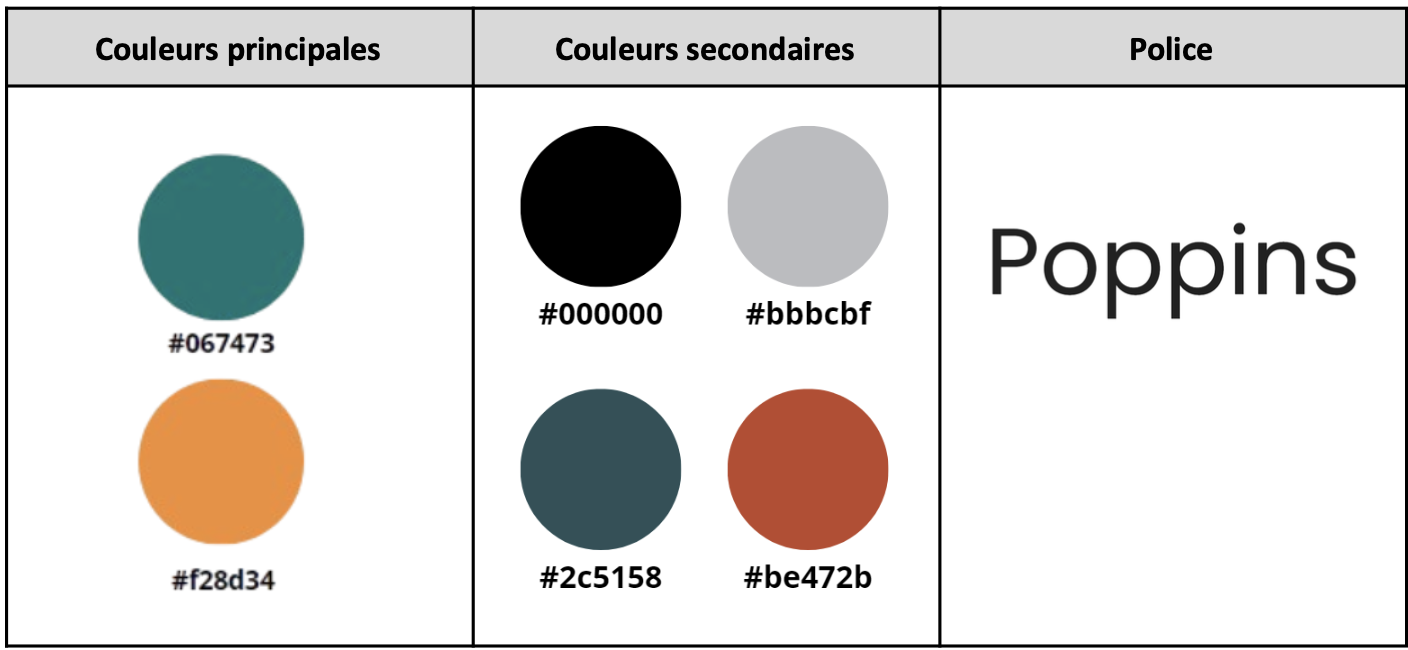
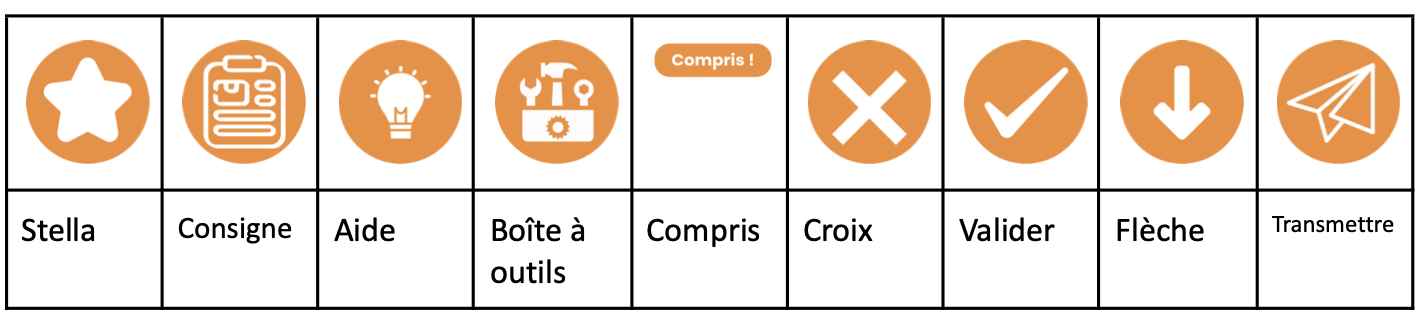
Views from style guide and mockups of screens for season 1.
Full Development & Delivery
The build phase was executed through a series of sprints managed in Notion. We first focused on creating a master template within the first episode, including developing all recurring, complex features—like the dynamic menu—with their associated triggers and states. Once this robust foundation was built, we could duplicate it for subsequent episodes and adjust content accordingly.
After perfecting all four episodes individually, we integrated them into a single Articulate Storyline project with a slick menu interface. Finally, to onboard players, we produced an in-game video that introduces learners to the universe and their role within the story.
The final product was a polished, feature-rich, and fully integrated first season of Astromail, delivered on schedule and ready for LMS deployment.
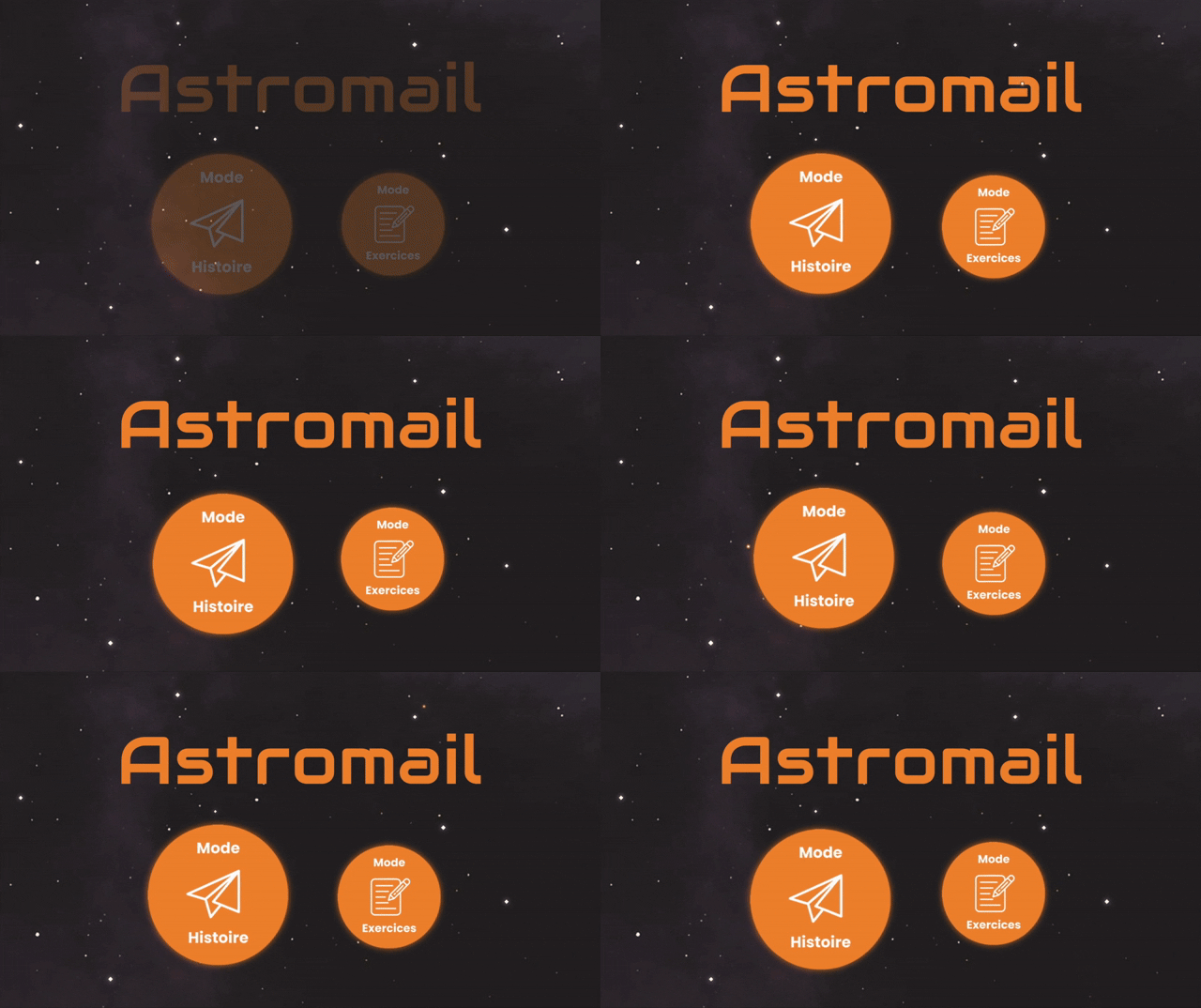
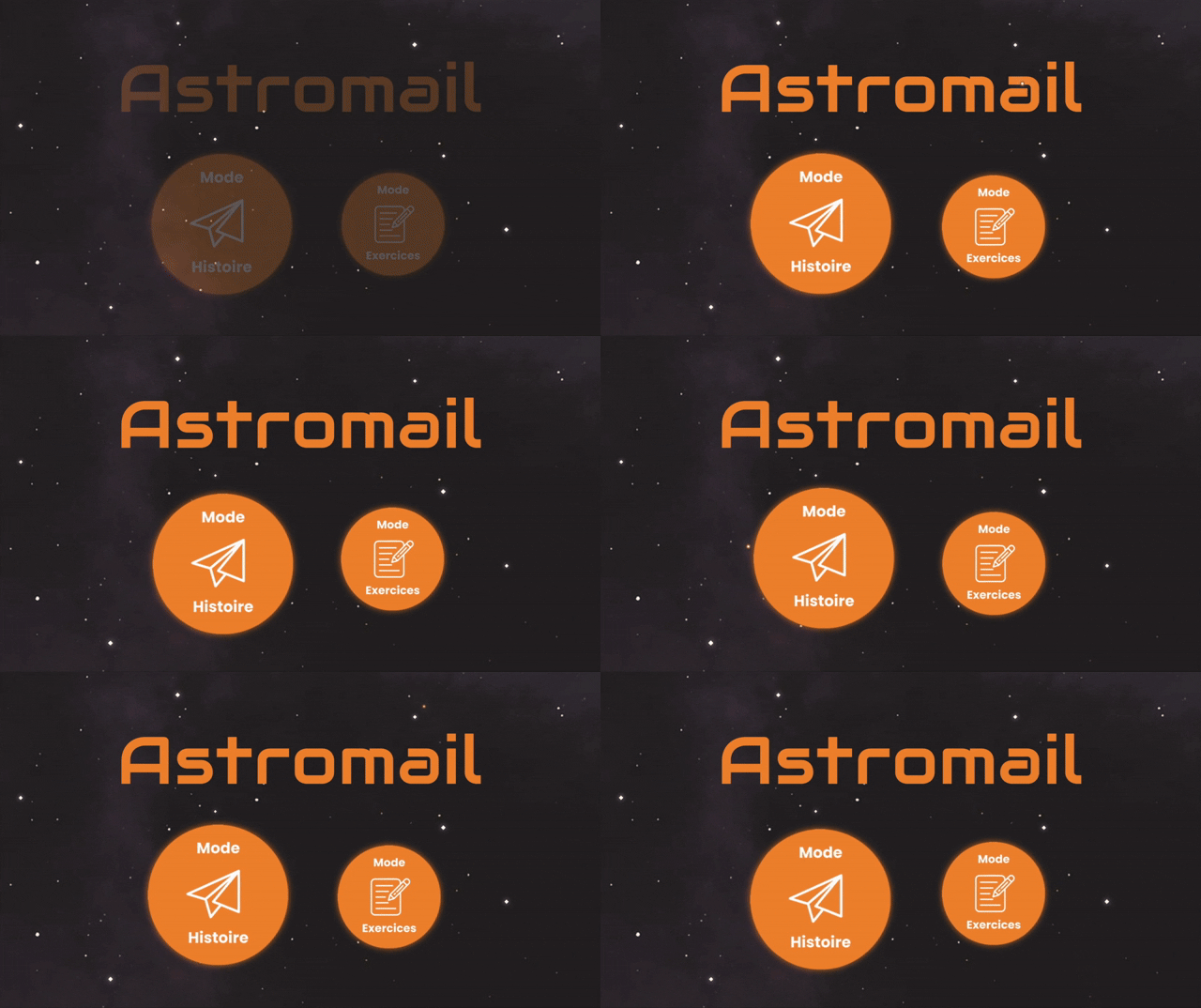
The main menu screen.
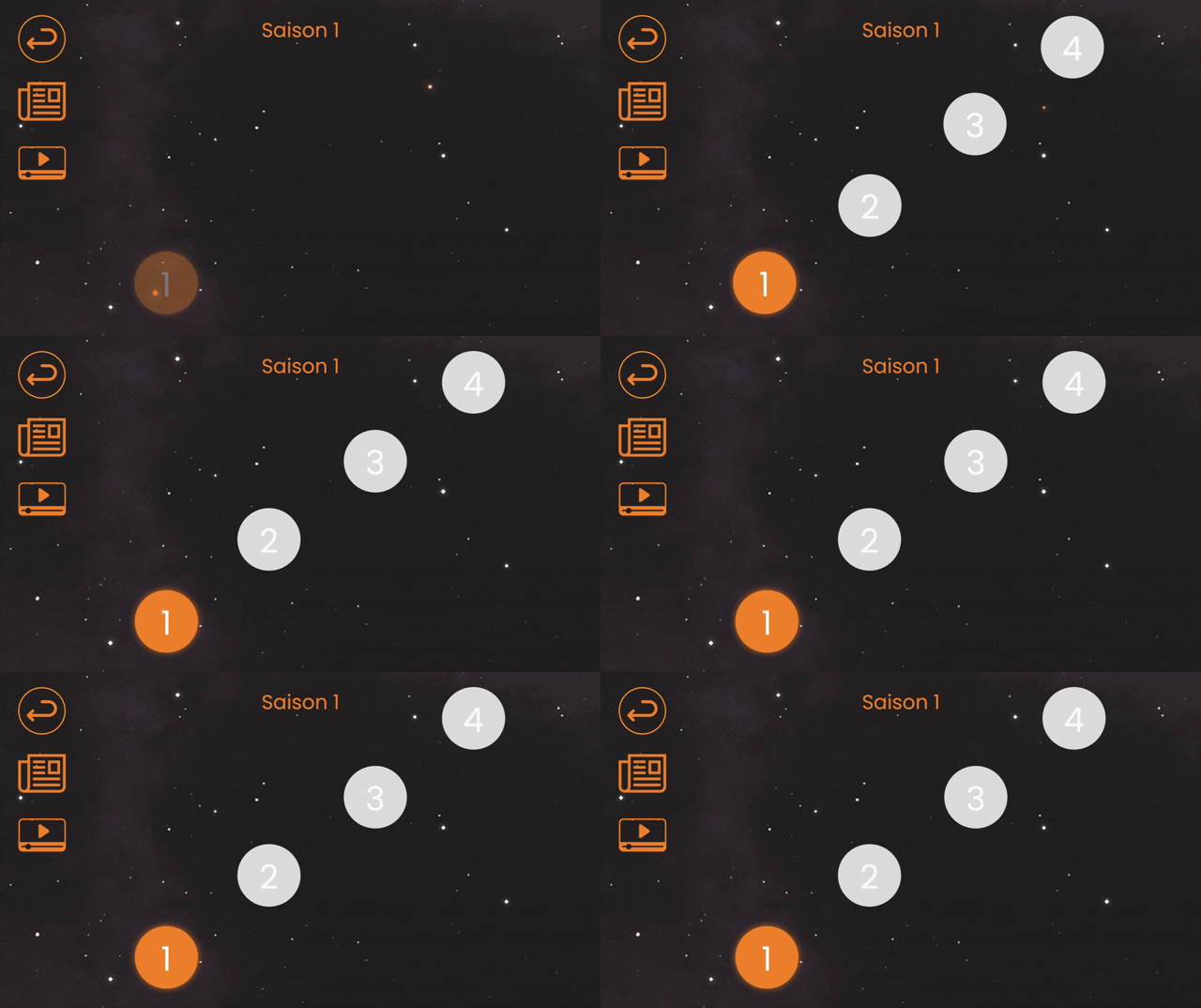
The episode selection screen.
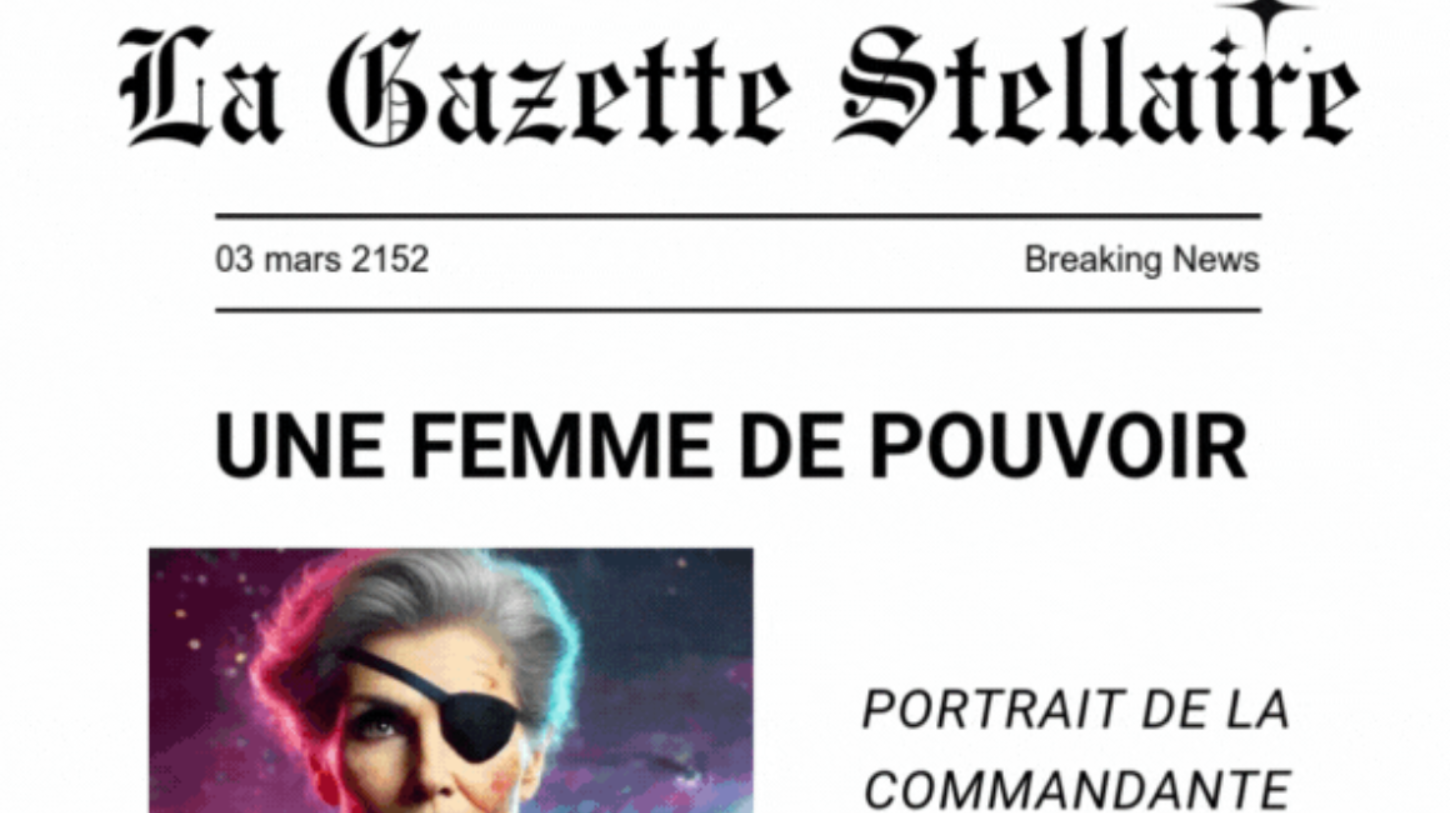
Step 1. Breaking news gives context at the beginning of an episode.
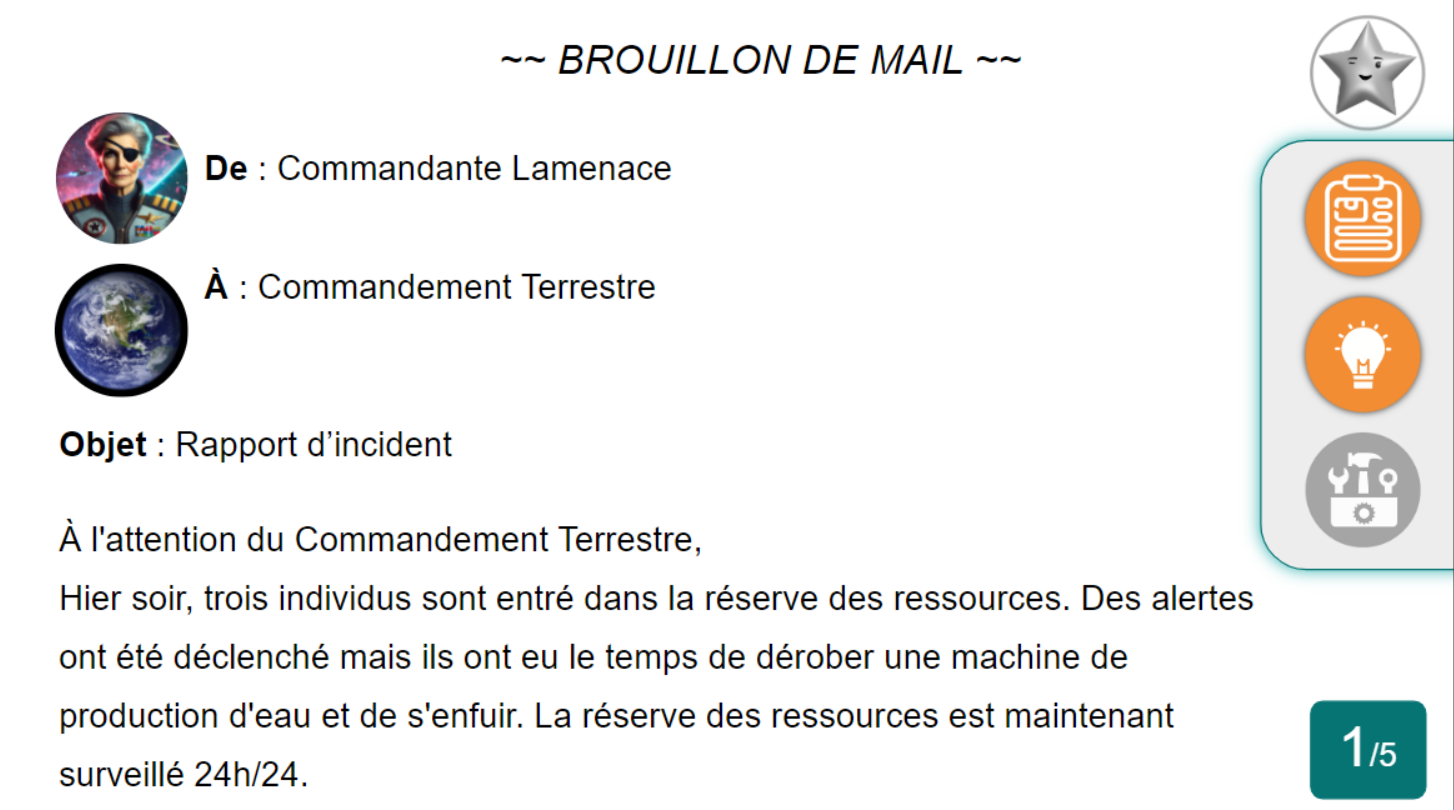
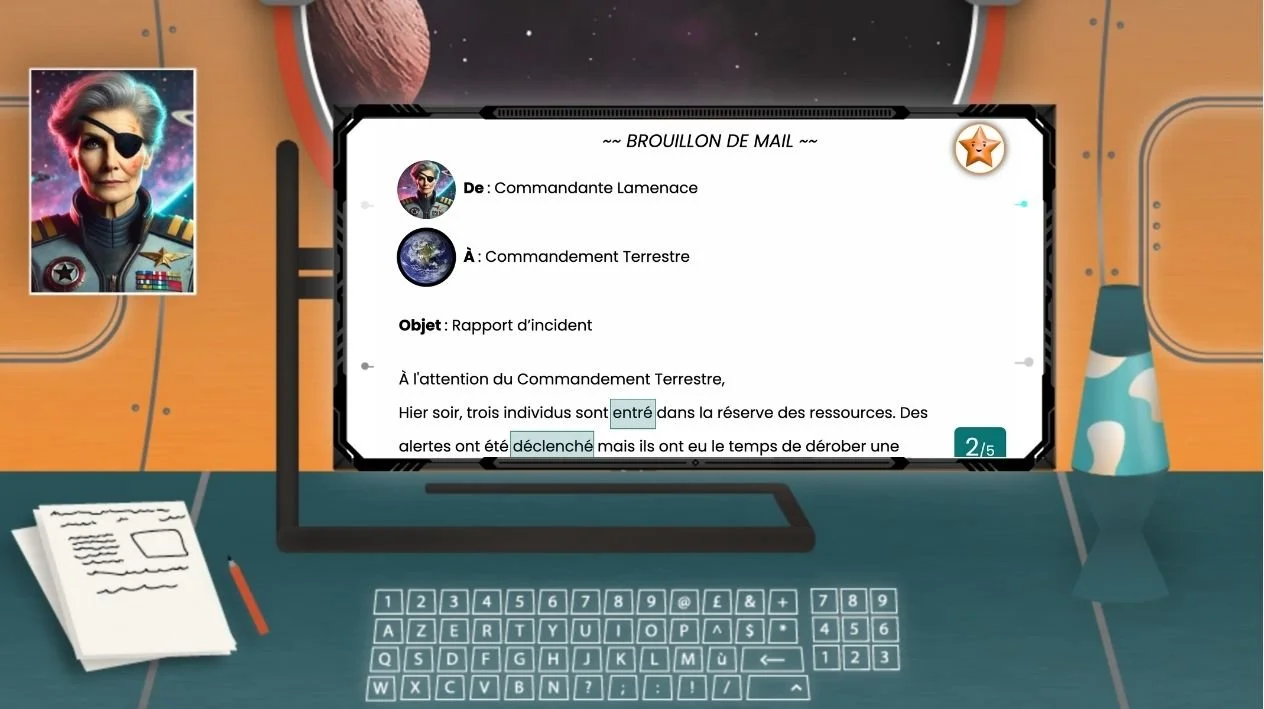
Step 2. Identifying key grammar mistakes in a message to Earth.
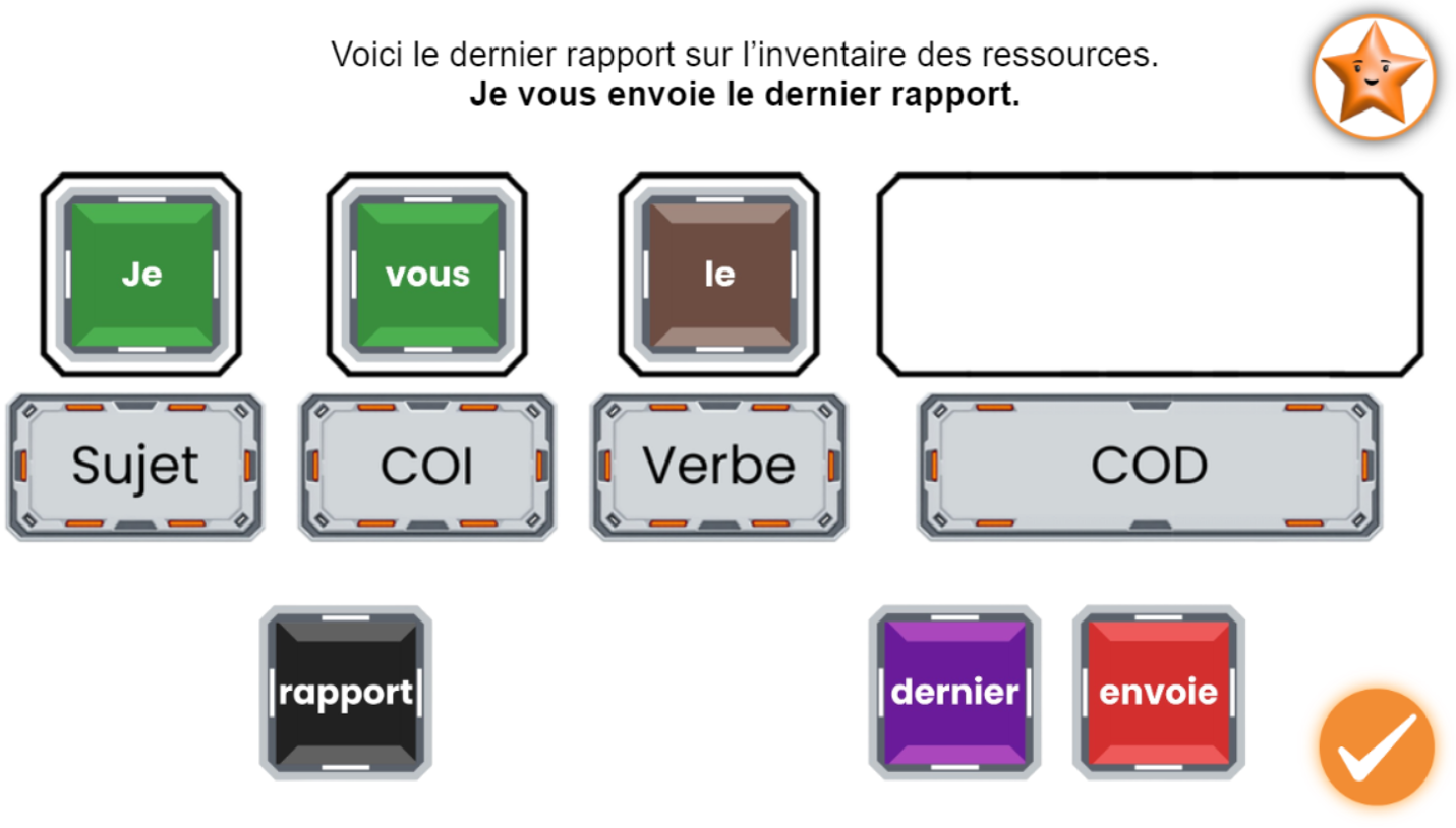
Step 3. Using simpliGRAM® tools to break down and correct errors.
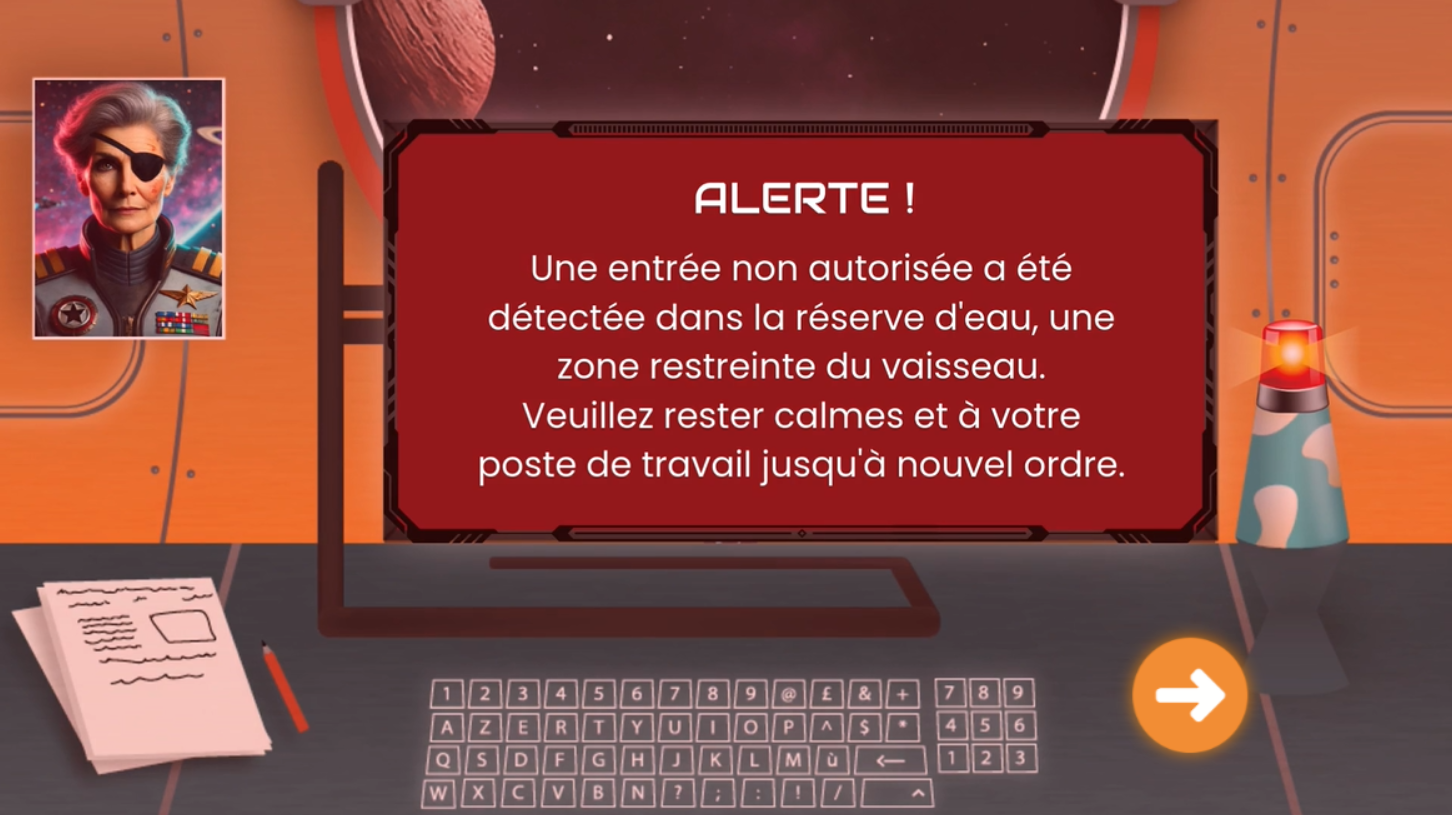
Step 4. The story takes an unexpected twist!
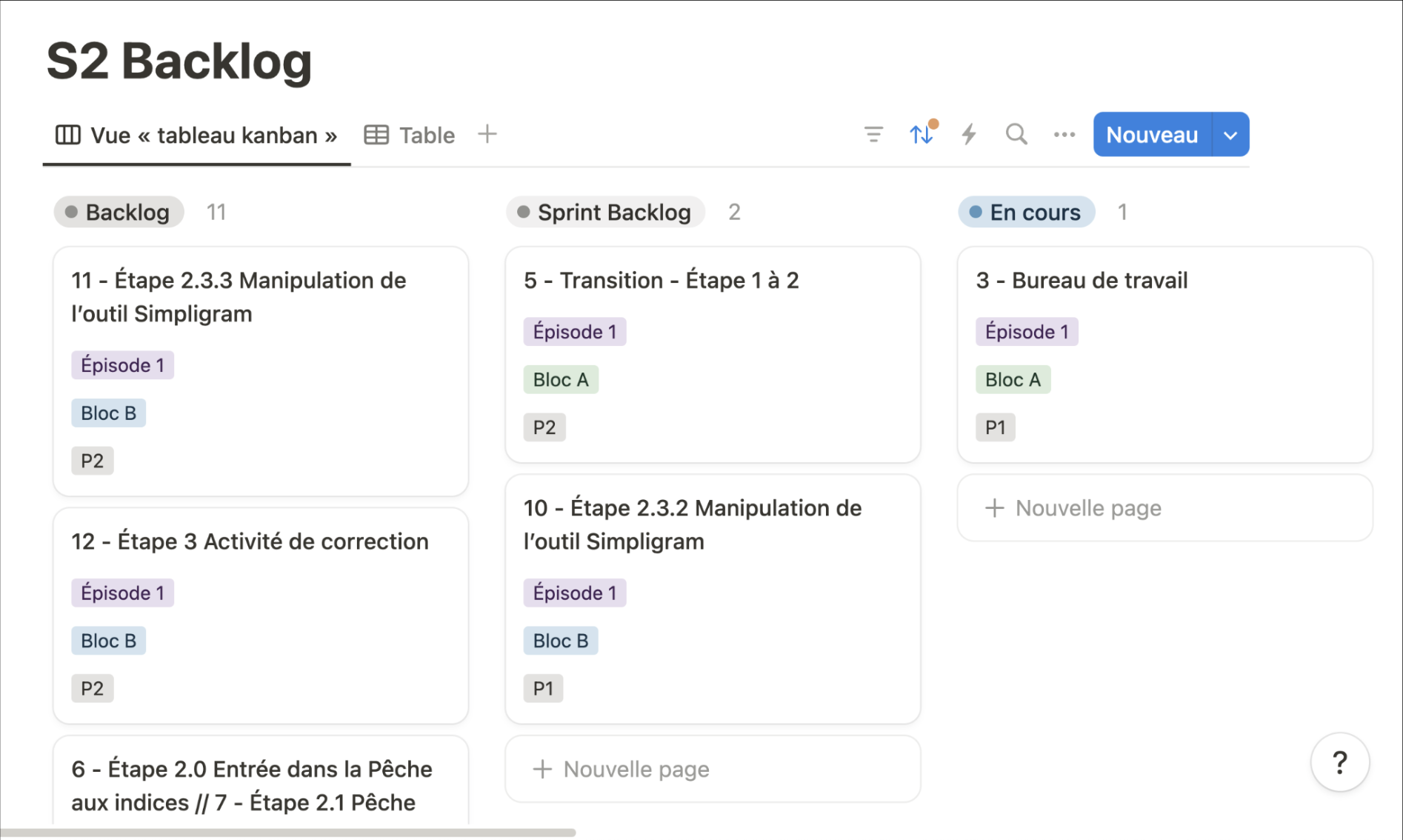
SCRUM Sprint planning and project management with Notion.
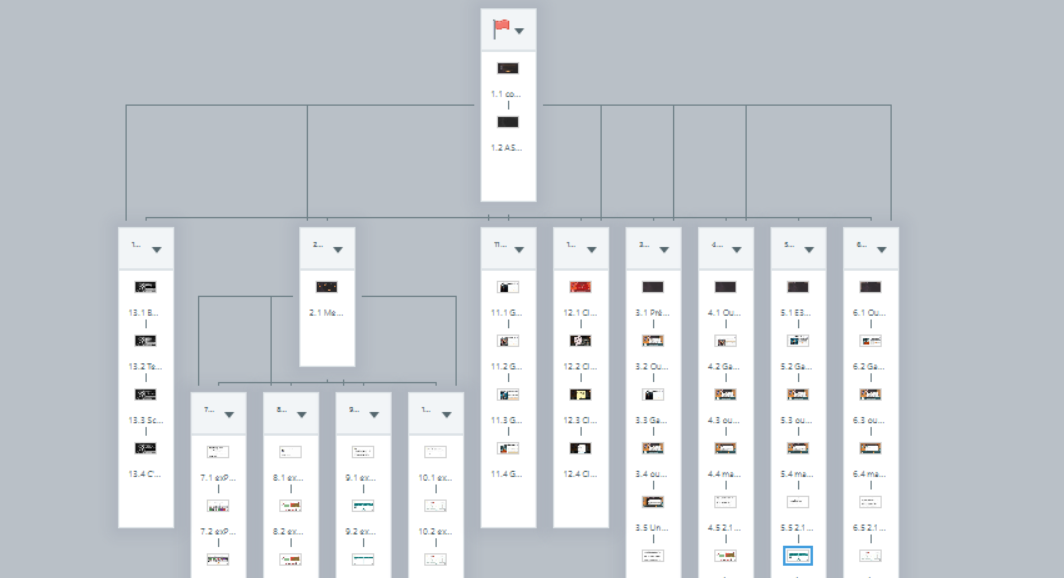
Astromail as seen in Articulate Storyline story view — fully assembled, polished and ready to publish for deployment.
Results & Takeaways
We delivered the full four-episode first season of Astromail to the client, earning high praise for balancing professional-quality production and simplicity with a creative vision that exceeded expectations. The client highlighted how the game met all learning objectives while providing an engaging narrative experience.
This project reinforced several key insights for me as a learning designer and leader:
The learner’s actions must always be meaningful. Astromail succeeds by embedding grammar correction in purposeful tasks—perfecting vital communications in a world the player cares about—mirroring real-life professional proofreading.
Trust the creative vision. Our ambitious narrative-driven job simulator initially seemed risky, but our creative vision fueled problem-solving and produced a more impactful result than a conservative approach would have.
Empower your team. As a Product Owner, my role was not just to direct, but to encourage each team member to take ownership and infuse their work with their own creative expertise. This way, we achieved a result far richer than a top-down approach ever could.
Bonus - Astromail Launch Videos
Alongside the development of the game, I designed and produced two launch videos using DaVinci Resolve.
Follow the link below to learn more about my video production skills.

DaVinci Resolve